English
 Arabic
 French
 Spanish
 Portuguese
 Deutsch
 Turkish
 Dutch
Dutch
 Italiano
 Russian
 Romaian
 Portuguese (Brazil)
 Greek
Greek

48 Top Sites to Buy old Gmail Accounts (Aged or New) in ...
Other |
2026-09-12 13:10:32
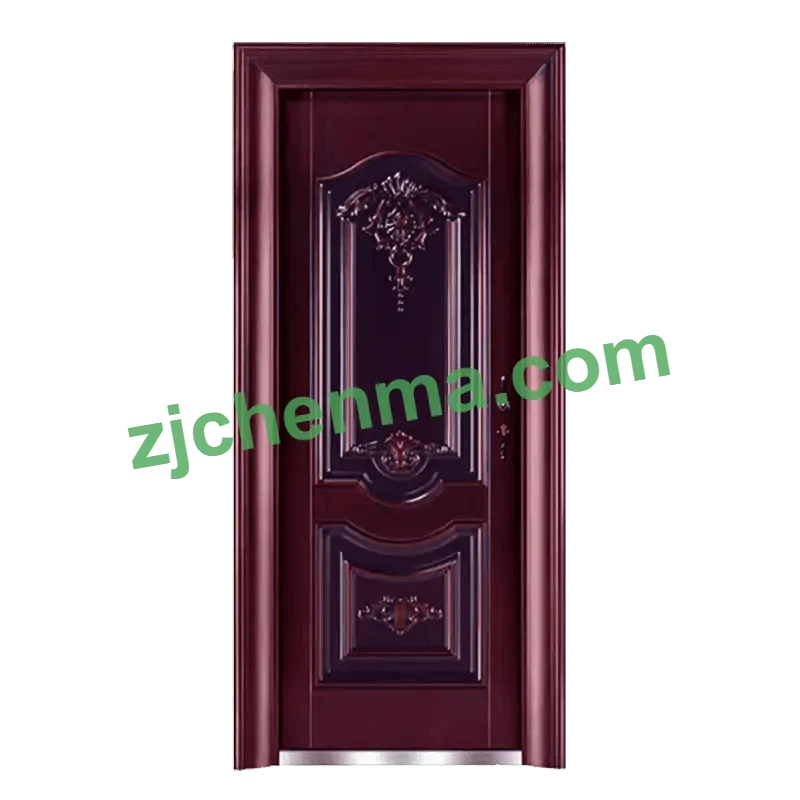
A door is one of the first architectural elements people notice when approaching a building, so its visual treatment can influence how the entire entrance is perceived. For a Classic Steel Door, color is not simply a decorative choice because it interacts with panel details, frame proportions, surrounding walls, flooring, lighting, and hardware. CHENMA, represented by zjchenma, provides classic steel door designs with different styles and surface finishes, giving projects room to consider color as part of the overall entrance composition. So, how can the right color shape the character of a classic steel door?
The surrounding architecture is usually the first factor worth considering. A traditional house may contain stone, brick, textured plaster, timber details, or decorative exterior elements, while a contemporary building may rely on smooth walls and restrained geometric forms. A door color that responds to these materials can create visual continuity without making the entrance appear disconnected from the rest of the building. Deep neutral tones can establish a grounded appearance, while warmer metallic effects can introduce a traditional feeling that works naturally with decorative architectural details.
Light conditions also change how a door color is perceived. A surface exposed to strong daylight may appear different from the same finish positioned beneath a covered entrance. Morning and afternoon light can create different reflections across metal panels, while artificial lighting can influence the apparent warmth or coolness of a finish after sunset. For this reason, color selection should consider the actual installation environment rather than relying only on a small sample viewed indoors. The relationship between surface texture and illumination can be especially noticeable when a door includes raised panels, engraved elements, borders, or decorative patterns.
The size of the entrance is another consideration. Darker colors can give a large doorway a visually grounded appearance, while lighter shades can create a softer impression around a compact entrance. However, the effect is not determined by color alone because frame width, panel arrangement, handle position, glass sections, and surrounding wall tones also influence visual proportion. A carefully selected finish can support the intended architectural balance without requiring excessive decoration.
Classic styling often depends on details, and color can either emphasize or soften those details. A door with ornamental panels, curved lines, engraved motifs, or decorative borders may benefit from a finish that allows the structure to remain visible without creating excessive visual contrast. Conversely, a simpler panel design can accept a stronger surface character because the finish itself becomes part of the visual expression. CHENMA's classic steel door range includes different styles and finishes, while its customization service covers color and surface treatment, allowing design decisions to be considered alongside other door specifications.
The relationship between the door and its hardware should also be examined. Handles, locks, hinges, door viewers, and decorative fittings have their own finishes, and their interaction with the main panel can influence the overall appearance. A dark door paired with a metallic handle may create a defined focal point, while coordinated tones can produce a quieter visual relationship. Hardware does not need to disappear, but its finish should make sense with the selected door surface and architectural setting.
Surface treatment can change the character of the same basic color. A smooth painted surface reflects light differently from a textured finish, while imitation copper effects, transfer finishes, and other treatments can introduce visual depth. CHENMA's published classic steel door information includes finishes such as transfer treatment, imitation copper, and powder coating on selected models, demonstrating how the surface process can become part of the design language rather than functioning only as a protective layer.
Color selection can also relate to practical maintenance expectations. Entrance doors are exposed to fingerprints, dust, rain, sunlight, and frequent contact around handles and edges. A finish with an appropriate texture and treatment can make ordinary marks less visually prominent, while a surface that strongly reflects light may reveal small irregularities under certain conditions. This does not mean that one color is universally suitable, since the choice should correspond with the door's environment, cleaning routine, surrounding materials, and desired visual effect.
For projects involving multiple entrances, color can provide a consistent architectural language. Residential developments, hospitality buildings, offices, and other properties may use the same basic door structure while adjusting finishes for different areas. A coordinated palette can help separate entrances by function while retaining a connected appearance across the property. When customization is required, color can be considered together with dimensions, materials, patterns, hardware, and other specifications rather than being selected as an isolated final step. CHENMA's customization service covers these areas as part of its door development and production process.
Another point concerns the relationship between classic and contemporary design. Traditional colors and metallic finishes can reinforce historical or decorative architectural references, while restrained neutral tones can give a classic panel structure a cleaner visual expression. This flexibility allows a steel door to retain familiar proportions or ornamental elements while adapting to the atmosphere of a newer building. The result depends on the interaction between color, form, texture, and architectural context rather than the color itself.
For buyers and designers, requesting color information early can make the development process easier because the selected finish may influence how the frame, panel details, accessories, and surrounding materials are coordinated. Sample evaluation under natural and artificial light can also provide a practical understanding of the finished appearance. When a project requires a particular aesthetic direction, discussing drawings, samples, surface treatments, dimensions, and hardware together can reduce uncertainty during product development.
For a project requiring a carefully coordinated entrance, the CHENMA classic steel door range can be reviewed through https://www.zjchenma.com/ to examine available design directions and surface expressions. Color becomes especially useful when it is treated as part of the complete door specification, working alongside panel form, frame structure, hardware, and architectural surroundings. A Classic Steel Door can therefore take on distinctly different visual identities through thoughtful color and surface selection, while the underlying steel construction remains connected to the practical requirements of the entrance.